

If you're looking for a number, here it is: give it three months before you decide whether curcumin is doing anything for you. Not three days, not three weeks. Three months of consistent, daily use. Anyone promising results overnight is describing something other than how the body actually works.
Why curcumin takes months, not days
Your morning coffee hits you in twenty minutes. Curcumin works on a slower clock, and no formula changes that, ours included. It's a compound you take daily and top up, closer to how you'd treat sleep or training than a quick fix. The research reflects that: a 2023 review mapped 389 human trials of curcumin supplementation and found the average one ran 2.6 months. [1] When scientists want to see whether curcumin is doing anything, they design in months, not days.
So if you started on Monday, don't judge it by Saturday.
Weeks 1 to 2: the settling-in period
This is the point where most people feel nothing different, and it's completely normal. It's also, honestly, the point where a lot of people quietly stop taking whatever they started, because two weeks without a noticeable change can feel like proof it isn't working.
It isn't proof of that. It's proof that two weeks isn't long enough to judge anything taken daily for a cumulative effect. If you're at this stage and wondering whether to bother continuing, that doubt is the normal part, not the exception.
Weeks 4 to 8: becoming part of the routine
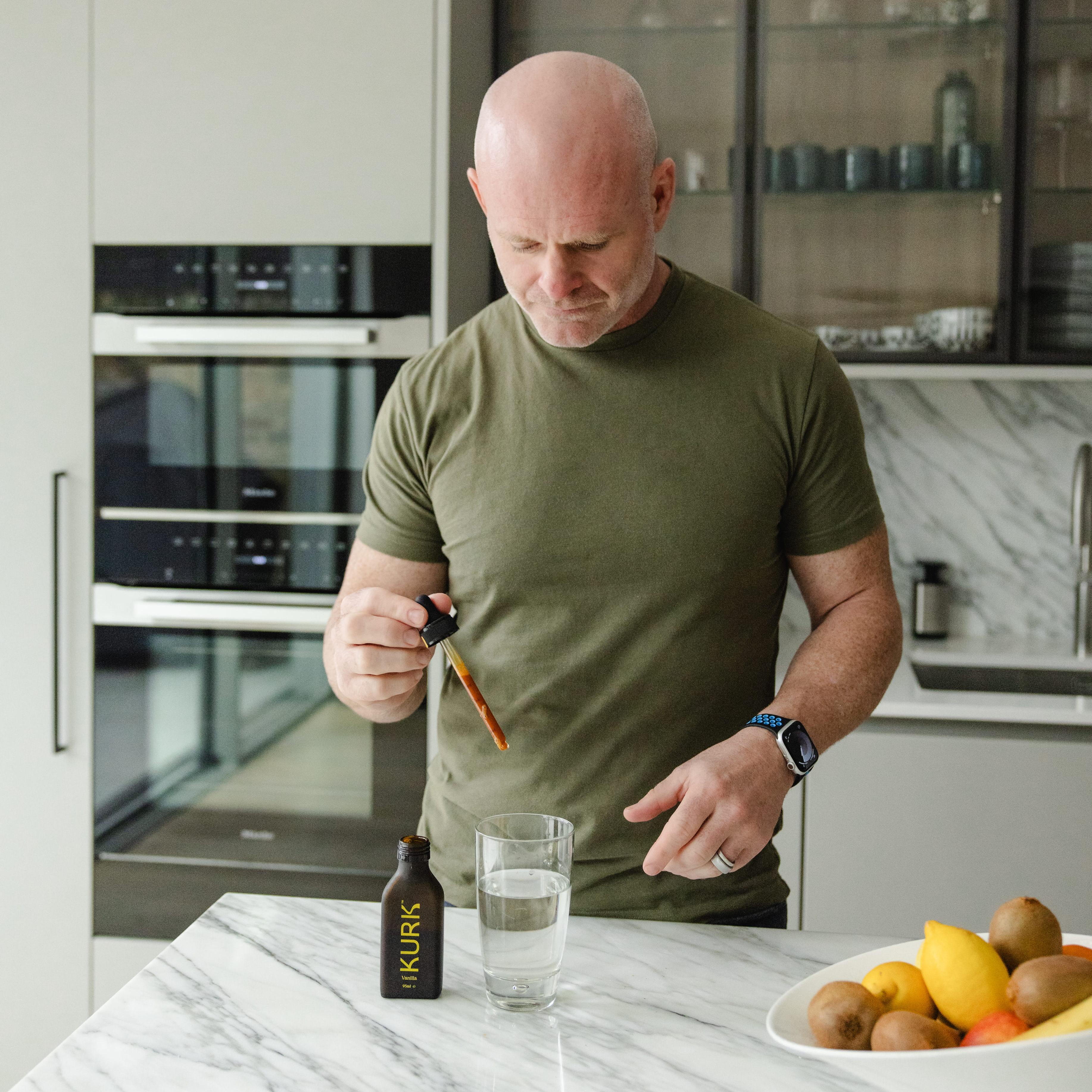
Somewhere in this window, taking KURK stops being a decision you make each morning and starts being something you just do, the way brushing your teeth doesn't require willpower after the first few weeks. That shift, from conscious effort to habit, tends to matter more long-term than any single week's experience.
This is also usually the stage where people start being able to say whether it's fitting into their life or not, rather than whether it's "working" in some dramatic sense. Those are different questions, and the second one is the one worth answering honestly at this point.
3 months: the real checkpoint
Three months is the point KURK asks people to genuinely evaluate from, not because it's a marketing-friendly number, but because it's roughly how long a consistent daily habit needs to bed in before you can fairly judge whether it belongs in your routine.
If, after three months of actually taking it daily, you don't feel it's added anything, that's a legitimate answer, and it's exactly why KURK backs the first order with a 60-day money-back guarantee. You're not being asked to gamble three months of money to find out, only to commit to giving it a fair, honest trial.
Why KURK doesn't promise it works fast
Plenty of wellness marketing promises quick results because quick results sell. KURK doesn't, because that promise sets people up to quit exactly at the point (weeks 1 to 2) where nothing measurable has had time to happen yet, and then blame the product rather than the timeline.
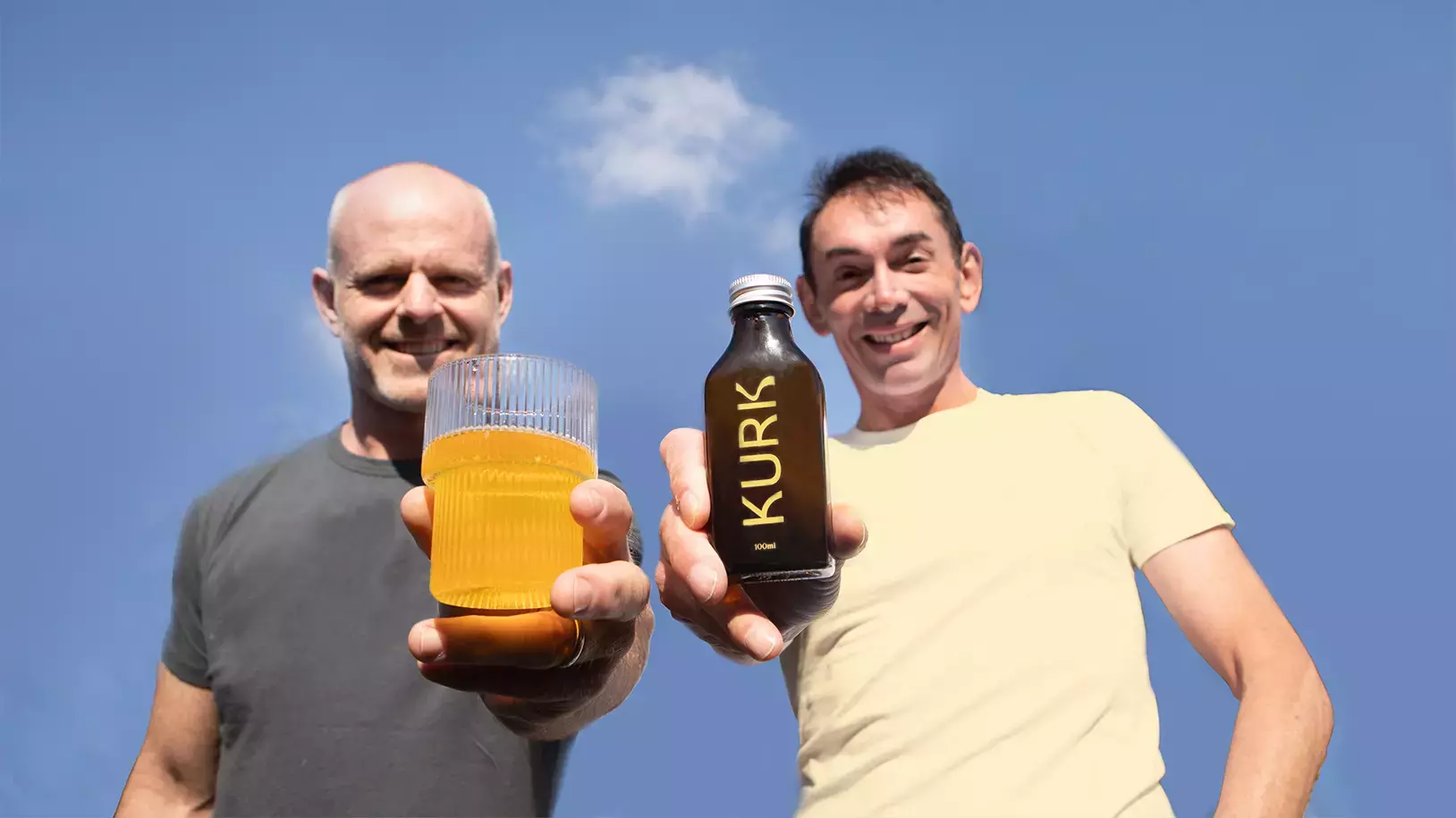
KURK was founded by two cancer survivors who formulated it themselves, doctor-led from day one, built on the belief that people deserve an honest timeline rather than an easy sell. Six years of in-house R&D went into making the formula itself work harder. None of that changes how long a daily habit takes to become part of your life. That part is just biology, and being upfront about it is the more respectful approach, even when it's the less exciting one.
FAQs
How long does curcumin take to work? There's no single moment it "switches on." Most people are advised to allow three months of consistent daily use before judging whether it's made a difference, since the effect is cumulative rather than immediate. Across 389 published curcumin trials, the average study ran 2.6 months. [1]
Is it normal to feel nothing after two weeks? Yes. Two weeks is a common point where people expect a result and don't feel one yet, and it's also a common point where people give up. Neither reaction means anything has gone wrong.
What if I don't notice anything after three months? That's a fair and valid outcome for some people. And you don't have to reach the three-month mark to act on it: KURK's 60-day money-back guarantee opens your refund window long before then. [3]
Does taking it consistently matter more than the dose? Largely, yes. A daily habit maintained for months does more than an occasional dose taken inconsistently, since the effect is cumulative rather than immediate.
Plant science, perfected.
Related reading: this pairs naturally with a future "Why the Habit Matters More Than the Dose" piece (Topic #13, Geoff) once written, since both are built on the same consistency argument.
Sources
[1] Panknin et al. International Journal of Molecular Sciences, 2023;24(5):4476. Across 389 trials, average duration 2.6 months. https://doi.org/10.3390/ijms24054476
[2] Lally et al. European Journal of Social Psychology, 2010;40(6):998-1009. Median 66 days to automaticity, range 18-254. https://doi.org/10.1002/ejsp.674
[3] KURK 60-day money-back guarantee, KURK Essential product page. https://kurk.life/en-us/products/kurk-essential