

April is Stress Awareness Month. And if the latest data is anything to go by, it could not come at a better time.
Nine in ten UK adults experienced high or extreme levels of pressure or stress at some point over the past year, Mental Health UK according to Mental Health UK. The TUC's most recent figures show that 22 million working days were lost to work-related stress in 2024 to 2025, a record high. Trades Union Congress
Those numbers capture the scale of the problem. But they only tell part of the story.
Stress is not just a mental health issue. It is a physical one. And the gap between how stress feels day to day, and what it is actually doing inside the body, is wider than most people realise.
In this article, we look at what the science says about chronic stress, why its effects reach so far, and why what you give your body consistently matters more than any single fix.
April is Stress Awareness Month. And if the latest data is anything to go by, it could not come at a better time.
Nine in ten UK adults experienced high or extreme levels of pressure or stress at some point over the past year, Mental Health UK according to Mental Health UK. The TUC's most recent figures show that 22 million working days were lost to work-related stress in 2024 to 2025, a record high. Trades Union Congress
Those numbers capture the scale of the problem. But they only tell part of the story.
Stress is not just a mental health issue. It is a physical one. And the gap between how stress feels day to day, and what it is actually doing inside the body, is wider than most people realise.
In this article, we look at what the science says about chronic stress, why its effects reach so far, and why what you give your body consistently matters more than any single fix.
What is chronic stress?
Stress is the body's response to a perceived threat or demand. In small doses, it is not just tolerable. It is useful.
When the brain detects a threat, it triggers a rapid hormonal response. The hypothalamus, a small region at the base of the brain, signals the adrenal glands to release adrenaline and cortisol. Adrenaline makes the heart beat faster and raises blood pressure. Cortisol, the primary stress hormone, increases glucose availability in the bloodstream and enhances the brain's use of that glucose. Mayo Clinic
The result is a state of heightened alertness and energy. Useful when you need to respond quickly. Designed to be temporary.
Chronic stress is what happens when this response does not switch off. Not because the threat is severe, but because it is persistent. Work pressure, financial worry, disrupted sleep, a relentlessly busy life. None of these triggers a single dramatic event. Together, sustained over months, they keep the stress response running in the background, day after day.
When stressors are always present and the body always feels under attack, the fight-or-flight reaction stays turned on. The long-term activation of the stress response system, and too much exposure to cortisol and other stress hormones, can disrupt almost all the body's processes. Harvard Health

What does chronic stress do to the body?
It strains the cardiovascular system
One of the most well-documented effects of chronic stress is its impact on the heart and blood vessels.
Research suggests that chronic stress contributes to high blood pressure and promotes the formation of artery-clogging deposits. Harvard Health Chronic stress also promotes oxidative stress and endothelial dysfunction, contributing to the development of atherosclerosis and compromising vascular function. NCBI
Atherosclerosis is the build-up of plaques in artery walls, a key risk factor for heart disease.
This is not simply a consequence of unhealthy lifestyle choices made under pressure. Chronic stress appears to be an independent risk factor for cardiovascular disease.
It suppresses the immune system
Cortisol has natural immunosuppressive properties, which is useful in the short term. During an acute stress response, it prevents the immune system from overreacting.
Over the long term, the picture changes. People experiencing prolonged periods of stress are at increased risk of digestive and gastrointestinal problems, hypertension, diabetes, cardiovascular disease, loss of bone minerals, and immunosuppression. Frontiers The body's protective mechanism, held on for too long, becomes a vulnerability.
It disrupts sleep
Cortisol follows a natural daily rhythm. It peaks in the morning to help you wake and feel alert, and falls in the evening to allow sleep to come.
Chronic stress disrupts this rhythm. Elevated cortisol levels in the evening suppress melatonin production, making deep, restorative sleep harder to achieve. Poor sleep then elevates cortisol further. The two conditions reinforce each other in a cycle that is difficult to break without addressing both.
It impairs memory and cognitive function
High levels of cortisol are associated with impaired memory, and ongoing evidence suggests that even lower elevations of cortisol may lead to detrimental effects on cognitive function. Frontiers
The clarity and sharp focus that acute stress can produce becomes, under chronic conditions, the mental fog, difficulty concentrating, and poor recall that many people chalk up to ageing or being tired. Often, the stress load is a significant contributing factor.
It affects metabolism and weight
Elevated cortisol levels contribute to the buildup of fat tissue and to weight gain. Cortisol increases appetite, so people seek more food to obtain extra energy. It also increases storage of unused nutrients as fat. Harvard Health This is why many people find their eating habits shift under sustained pressure, and why stress and weight are more physiologically connected than they might appear.
Why the effects compound over time
This is the part that makes chronic stress particularly difficult to manage. Its effects do not stay separate. Each one feeds the others.
Poor sleep raises cortisol. Elevated cortisol suppresses immune function. A compromised immune system increases susceptibility to illness, which creates more stress. Disrupted cognition makes it harder to manage the situations causing the stress in the first place.
This is a system under load, with each part affecting every other. And it operates largely beneath conscious awareness. Most people living with chronic stress do not feel dramatically unwell. They feel tired, slightly off, not quite themselves.
The body, meanwhile, is carrying a measurable physiological burden.
What actually helps?
The honest answer is that there is no single intervention that reverses the effects of chronic stress. What the research consistently points to is the cumulative effect of daily habits, sustained over time.
Sleep quality, maintained across weeks, not recovered in a single night. Consistent movement, built into daily life rather than treated as an occasional event. Time in nature, which research suggests actively reduces cortisol levels. Social connection, which has significant physiological as well as psychological effects.
And the quality of what the body is given to work with every day.
During periods of sustained demand, the body needs reliable inputs at a cellular level. Not just what is present in what you eat or supplement, but what is actually absorbed and available to use. The gap between a compound that is technically present and one your body can genuinely access is not a minor distinction. During periods of high physical or psychological load, it becomes a meaningful one.
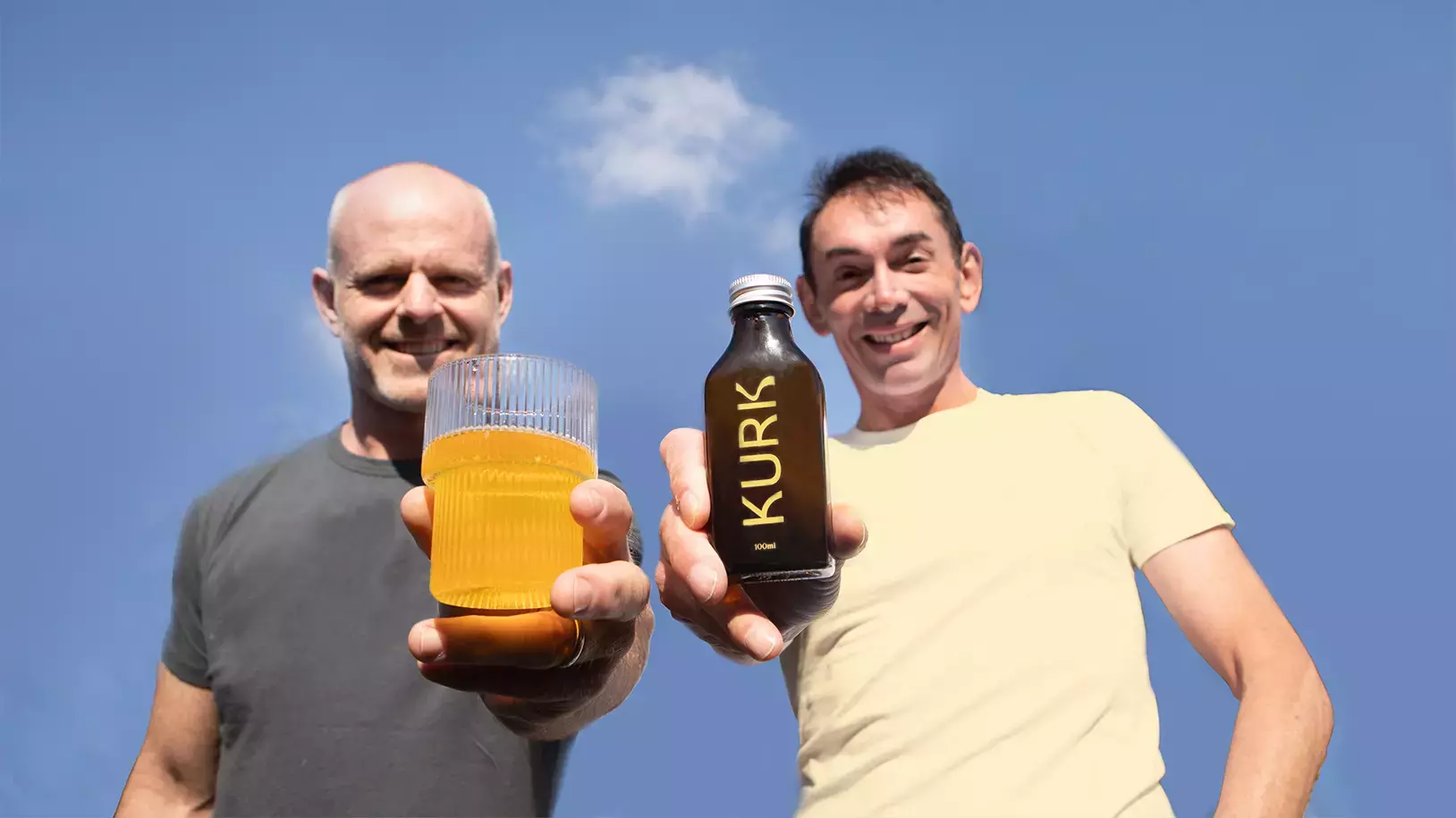
At KURK, this is the question our formulation is built around. Our plant-derived micellar technology exists because absorption is not a given. Bioavailability, what the body can actually use, is something that has to be specifically engineered. That question matters whether you are supporting a body under training load, navigating a demanding season at work, or simply trying to function well over the long term.

The bottom line
Stress is a normal, useful, and unavoidable part of life. Chronic stress is something different. When the stress response runs continuously, the effects reach across the cardiovascular system, the immune system, cognitive function, sleep, and metabolism.
Most of these effects develop gradually and quietly, long before they become symptomatic. That is precisely why understanding the physiology matters. Not to create anxiety about it, but to make better, more informed choices about what you give your body each day.
Stress Awareness Month ends today. The physiology it points to does not.
Explore the science behind KURK's formulation on our Science page.