

If you've added turmeric or curcumin to your routine, here's a question worth asking: do you actually know what's inside?
It's not a scare tactic. It's a documented issue. Since 2013, the FDA has issued more than a dozen import alerts for turmeric found to contain elevated lead. In 2024, Consumer Reports tested 126 herb and spice products from 38 brands and found that roughly one in three carried arsenic, lead, and cadmium levels high enough to raise health concerns, turmeric among them. And right now, the US doesn't have a federal lead limit for spices at all, unlike candy, fruit, or baby food.
That gap is exactly why we think transparency is worth talking about, even when the topic is uncomfortable. Here's what the science actually says, and what to look for the next time you shop.
Why turmeric, specifically?
Turmeric has a contamination problem other spices largely don't, and it comes down to one deliberate practice: lead chromate adulteration.
Lead chromate is an industrial pigment: bright, cheap, and orange-yellow. For decades, some turmeric processors have added it to raw turmeric root to make the color more vivid and the product heavier, which means more profit per batch. Researchers at Stanford University, working with the Bangladesh-based nonprofit icddr,b, traced this practice back to the 1980s in parts of South Asia, where it started as a workaround after flooding damaged turmeric crops, and it continued for four decades before its toxicity was properly addressed. In the areas they studied, some contaminated turmeric measured lead levels up to 500 times the local legal limit.
This isn't just an overseas issue. In 2016, New York State's Department of Agriculture and Markets routine food sampling led to the recall of six US-sold turmeric brands, including private-label lines sold at major retailers, after lab testing confirmed excessive lead. It's a reminder that "sold in the US" doesn't automatically mean "tested for this."
Why this is a blind spot
Here's the detail that surprises most people: the FDA has set maximum lead levels for several food categories, including candy, fruit, and food intended for babies, but it has not set one for spices. Testing for heavy metals in spices, including turmeric, is currently voluntary rather than mandatory.
The FDA is clear on the underlying science: there is no known safe level of lead exposure, and children and pregnant or nursing women are the most vulnerable to its effects on developing brains and nervous systems.
We saw a version of this play out publicly in late 2023, when cinnamon-containing applesauce pouches were pulled from shelves after testing found lead levels up to 300 times the recommended limit for products made for infants. The CDC ultimately tracked 566 related cases across 44 states. That recall involved cinnamon, not turmeric, and a different supply chain. But the underlying failure was the same one at the heart of the turmeric issue: an imported spice, added as a cheap bulking or coloring agent, moving through the supply chain with no mandatory metals testing to catch it.
Powder vs. extract: the detail most shoppers miss
Here's the part that's genuinely useful to know before you buy: not all turmeric products carry the same risk.
According to ConsumerLab's independent testing program, lead contamination is concentrated almost entirely in whole turmeric powder and ground spice, the form where lead chromate is added directly to the root for color. Their guidance is direct: this contamination is "not common in turmeric extracts or curcumin supplements."
There's a separate reason whole turmeric powder is a weak choice in the first place, aside from the contamination risk. As our Scientific Director Dr Harry Weisinger has explained it:
"Curcumin is a tease. We know it works in labs — disease pathways, inflammatory pathways — but our bodies can't absorb it in its natural form. It's a large crystal, fat-soluble, and not water-soluble. That's why turmeric lattes taste good but do very little."
So the same raw, ground turmeric that carries the highest contamination risk is also the form your body struggles to absorb in any meaningful amount. That's not a coincidence worth ignoring. It's a reason to look at format, not just the ingredient list.
What we do differently, and why we're telling you this
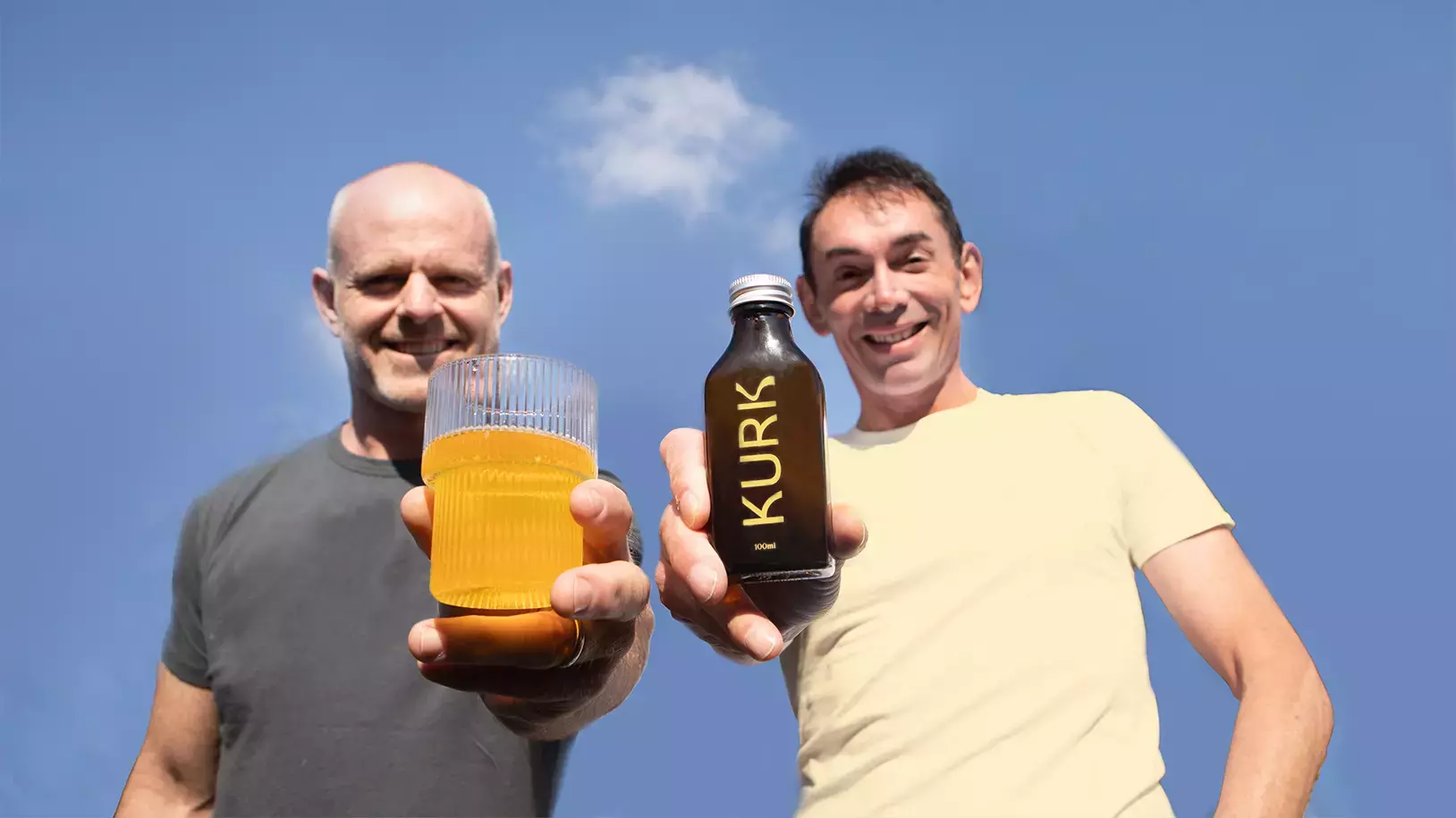
We built KURK as liquid curcumin, not powder or pills, specifically to solve the absorption problem, using micellar technology developed over six years of in-house R&D at KURK Biosciences, our own lab in London. The fact that this format also sits outside turmeric's highest-risk contamination category is a welcome outcome of that decision, not the reason for it.
But format alone isn't a safety plan. Testing is. Every batch we make is:
-
Independently lab-tested for purity
-
Rigorously tested for heavy metals
-
Produced in an ISO-certified laboratory
-
Overseen by our in-house Science Advisory Board
-
Informed Sport accredited
As Dr David Lipman, a member of KURK's Science Advisory Board, put it when discussing the standards we hold ourselves to:
"Scientific rigour and high-level evidence are sorely missed in the industry in general, and in KURK's category specifically. We hold ourselves to a high standard, and being leaders on this front in turn provides confidence to consumers."
Science you can trace, from lab to bottle. That's the standard, and we think every brand in this category should be held to it, not just us.
5 questions to ask before you buy any turmeric supplement
Save this list. It works for any brand, not just ours.
- Is it an extract, or whole/ground turmeric powder? Extract-based curcumin carries substantially lower contamination risk than raw powder.
- Does the brand mention third-party or independent lab testing, for purity and heavy metals specifically, anywhere on the label or website?
- Is it made in an ISO-certified facility, and does the brand say where?
- Can you find a certificate of analysis (COA) on request, or is testing just implied?
- Is the brand willing to talk about this topic at all? Transparency about a known industry issue is a good sign. Silence on it is worth noticing.
Know before you buy
Lead in turmeric isn't rare, and it isn't only a problem overseas, but it is avoidable. The format you choose and the questions you ask before checkout do more to protect you than any single brand claim.
FAQs
Is turmeric powder safe to cook with? Home cooking with a reputable, tested brand carries low risk for most people. The documented cases of elevated blood lead levels are linked to turmeric brought in informally from unregulated markets, or products later confirmed by testing to contain lead chromate, not turmeric in general.
How do I know if my turmeric supplement has lead in it? You generally can't tell by looking, smelling, or tasting it. The only reliable way is independent lab testing. Ask the brand for a certificate of analysis (COA) covering heavy metals.
What's the difference between turmeric and curcumin supplements? Turmeric is the whole root or powder; curcumin is the primary active compound extracted from it. Curcumin extracts avoid the raw-powder contamination pathway and are typically formulated for better absorption.
Does the FDA regulate lead in supplements? The FDA monitors lead in food generally and has set limits for some categories (like candy and baby food), and it can issue import alerts and recalls. It has not set a specific lead action level for spices, including turmeric, which is why independent testing by manufacturers matters.
These statements have not been evaluated by the Food and Drug Administration. This product is not intended to diagnose, treat, cure, or prevent any disease.
Sources:
-
Food Safety News: "Six brands of turmeric added to recall for excessive lead" (2016)
-
Stanford Medicine: "Turmeric's unexpected link to lead poisoning in Bangladesh"
-
Consumer Reports: "Your Herbs and Spices Might Contain Arsenic, Cadmium, and Lead"
-
CDC MMWR: Lead and chromium exposure investigation, cinnamon applesauce (2024)