

You have probably heard it a hundred times. Move more, sit less. Use it or lose it. Stay active.
It is good advice. But it is also incomplete. And for anyone in their 40s, 50s, or beyond who is thinking seriously about how they move now and how they want to move in ten years' time, incomplete advice can actually get in the way.
We spoke with Dr. David Lipman, health & performance expert and member of the KURK Scientific Advisory Board, about what it really takes to maintain the kind of movement that matters. What he had to say challenged some assumptions we had not even realised we were making.
First, there is a difference between flexibility and mobility (and it matters more than you think)
Most people use these words interchangeably. They are not the same thing.
Flexibility is largely about a single joint and its range of motion. Mobility is something bigger. It is about whether you can actually move through a position with control, incorporating strength and coordination alongside range of motion. You can be flexible without being mobile. But you cannot be mobile without a degree of flexibility.
According to Dr. Lipman, if you are only going to prioritise one, prioritise mobility. It is more integrated, more functional, and more relevant to how your body actually needs to perform in daily life.
Why "use it or lose it" is true but not the whole picture
The phrase is correct as far as it goes. Every physical capacity in the body follows this principle, including, interestingly, cognitive function. If you want to keep a capacity, you need to keep using it.
But here is what that framing misses: the goal should not just be maintenance. It should be to increase capacity, so that what you are maintaining is a standard worth having.
There is also a specific sequence to understand as we age. We tend to lose power first, then strength. Endurance holds up relatively well. Flexibility is often lost not because of age itself, but because we simply stop using those ranges of motion. Our lives as adults, and particularly as older adults, do not demand the same movement variety that childhood did. The loss is a consequence of disuse, not inevitability.
That distinction matters. It means the trajectory is, to a significant degree, within your control.
The three areas most people need to focus on
When it comes to where movement limitations tend to develop, Dr. Lipman points to three joints that come up consistently: hips, ankles, and shoulders.
Hips work hard all day and get tight easily. Prolonged sitting accelerates this. Because they are inherently mobile joints, they need both strength work and mobility work to stay functional.
Ankles, specifically dorsiflexion range (the ability to lift your foot upward), are commonly restricted and commonly overlooked. Limitations here affect everything from walking to squatting to balance.
Shoulders can gradually lose range in ways that only become obvious when you reach for something overhead or try to put on a coat. By then, the limitation has usually been building for some time.
The common thread across all three: these are joints designed for mobility, which means they require active maintenance. They will not stay capable on their own.
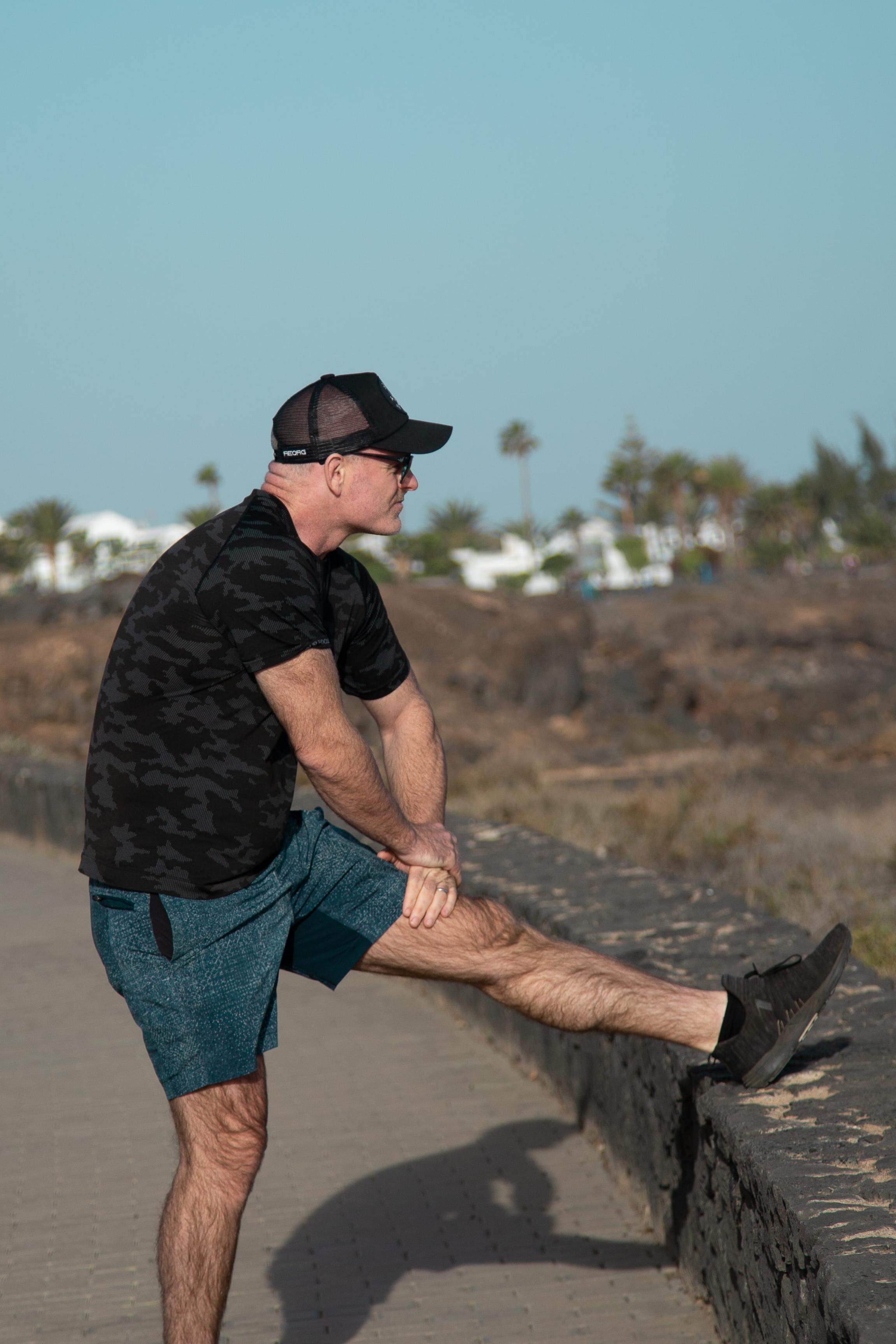
The counterintuitive case for doing less, more often
When it comes to mobility work, most people think about duration: "I should do ten minutes a day." Dr. Lipman's perspective reframes that entirely.
Ten minutes of mobility work is actually quite a lot. And for most people, how often you access a range of motion matters more than how long you spend on it in one go. Breaking ten minutes into three shorter sessions across the day is likely more effective than a single ten-minute block, because much of what you are training is the nervous system, not just the muscles and joints.
Frequency signals to the body that these ranges of motion are relevant. That they should be maintained.
The floor test: a better measure of functional health
Forget BMI for a moment. Here is a more honest question: when did you last sit on the floor?
For most adults, the honest answer is: not recently. And not being able to get up and down from the floor easily is one of the earliest signs that functional mobility is declining in ways that will matter later. Getting down to play with grandchildren. Getting up after a fall. Moving confidently in space.
Dr. Lipman points to these kinds of outcome goals as a more useful measure than abstract flexibility metrics. Can you squat down? Can you get up from the ground unassisted? Can you reach behind you? These are the questions worth asking.
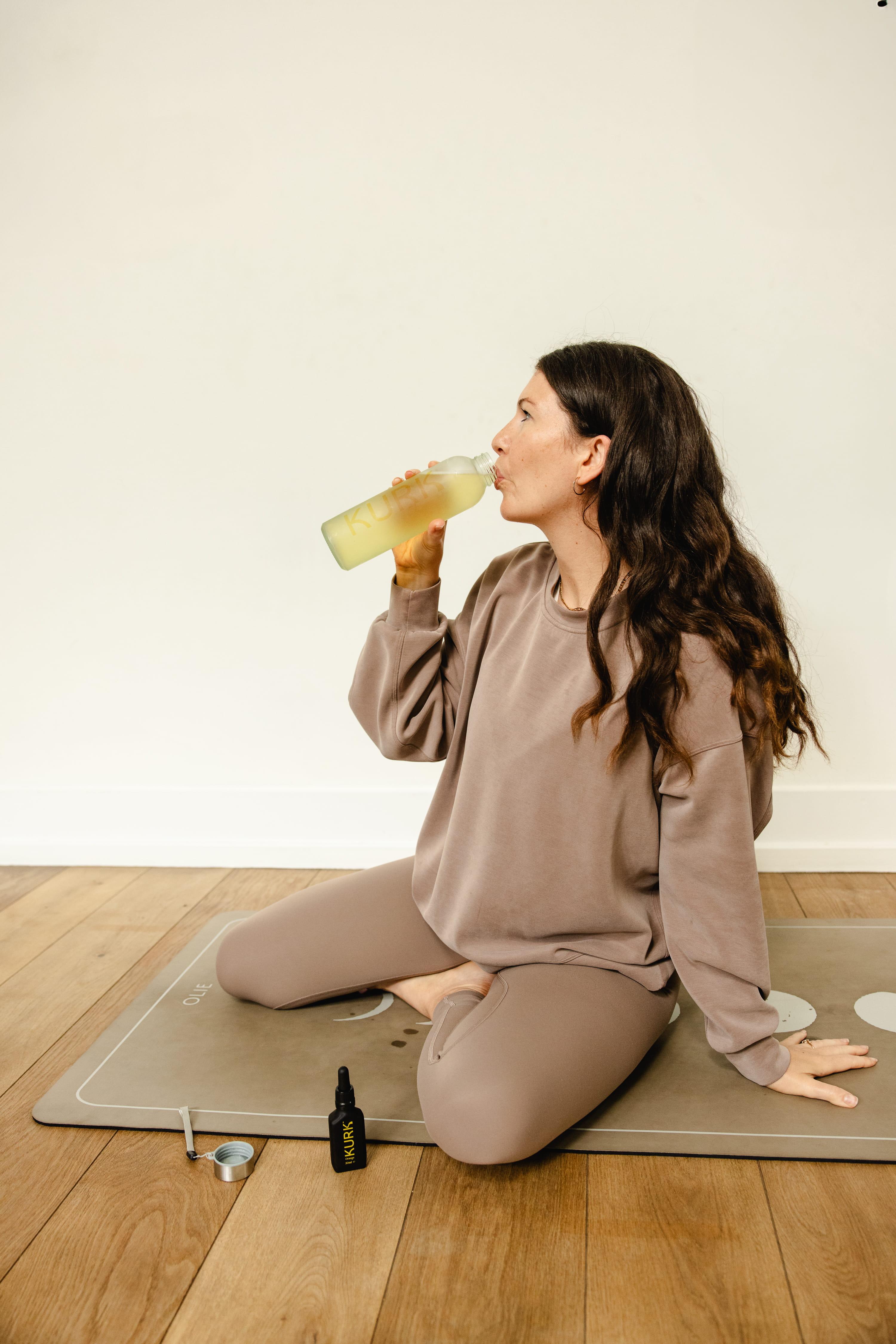
The habit that makes all of this stick
None of this works without consistency. And consistency, according to Dr. Lipman, requires a specific kind of thinking that most people get backwards.
The goal should be set for your worst days, not your best. If the bar is so low you can clear it even when tired, busy, or unmotivated, you will clear it. And over time, something predictable happens: the habit grows on its own. What starts as three minutes becomes five, then ten. Not through willpower, but through the natural momentum of showing up repeatedly.
Start smaller than feels meaningful. That is not a compromise. That is the strategy.
What this means for the long game
Staying mobile into your 60s, 70s, and beyond is not about dramatic overhauls or peak-day performances. It is about what you do on ordinary days, consistently, across years.
The research is pointing increasingly toward quality of movement as a marker of long-term wellbeing, not just quantity of exercise. And quality of movement depends on the inputs you give your body, including how you move, how often, and what you support that movement with.
At KURK, our focus has always been on the long game. Ingredient quality, scientific rigour, and habits that hold up over time. That is why conversations like this one with Dr. Lipman sit at the heart of what we do.