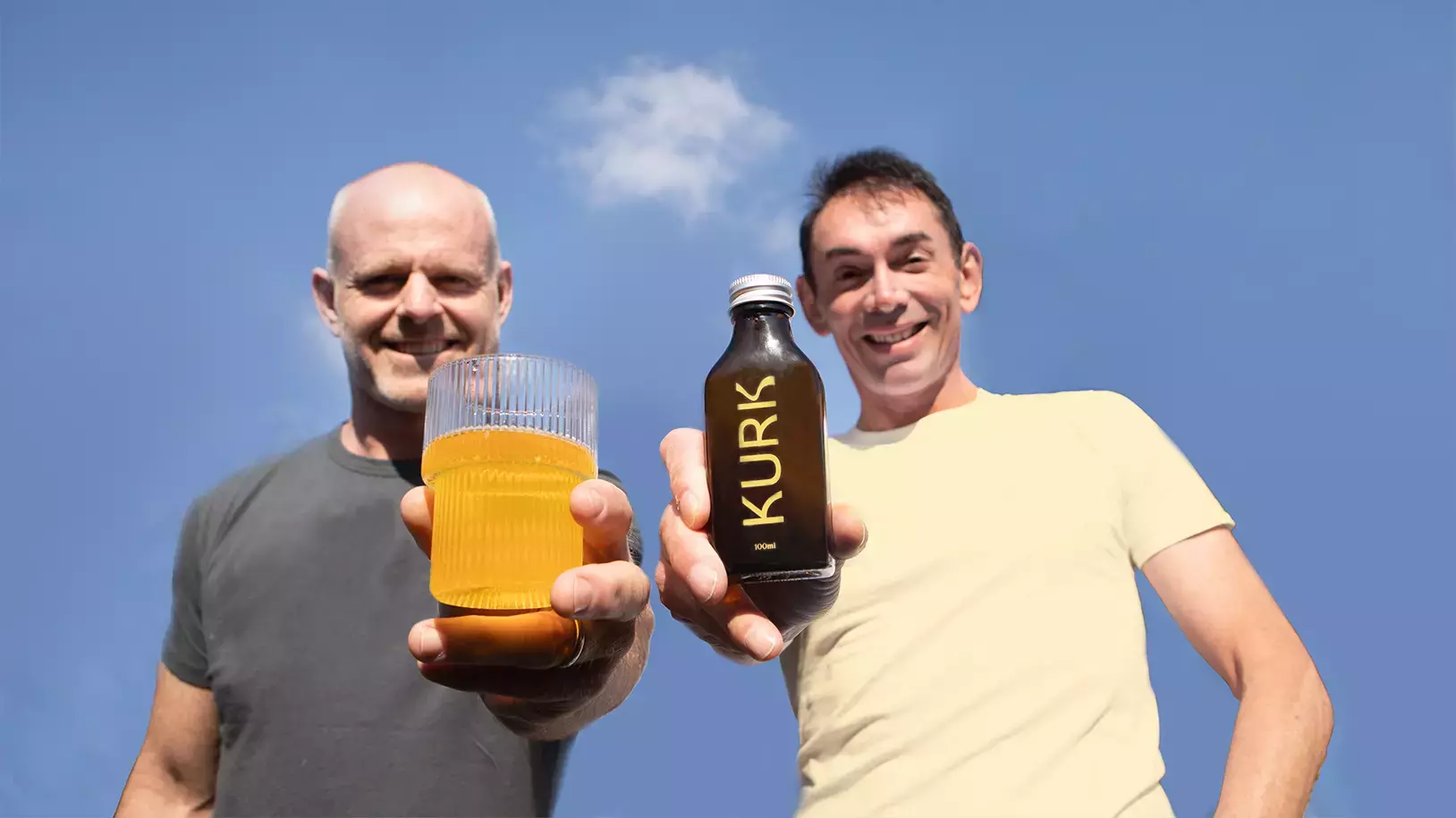


Fifty years of resistance training. Mid-60s. Still pushing 80% of the weight he moved as an Australian international. This is not a comeback story.
Wayne Pearce built his career on preparation. By his own account he wasn't as big as a lot of the players, and probably not as skilful. What he had was preparation, and he turned it into a competitive advantage that took him from Balmain to the NSW Origin side and the Australian jersey. Fifty years of resistance training. Mid-60s. Still pushing 80% of the weight he moved as an Australian international. This is not a comeback story.
Fifty years later, the preparation has not stopped. Three to four weight sessions a week, one to two aerobic, and a racing ski out on the harbour because the knees will not take running anymore.
That is the reason this partnership works. Wayne has spent five decades running experiments on himself, from diet to training to what he takes and when, with a science degree behind the curiosity. He has had plenty of approaches to endorse products over the years, and the reason most of them went nowhere is that the science was not there. He trialled ours before he would put his name near it.
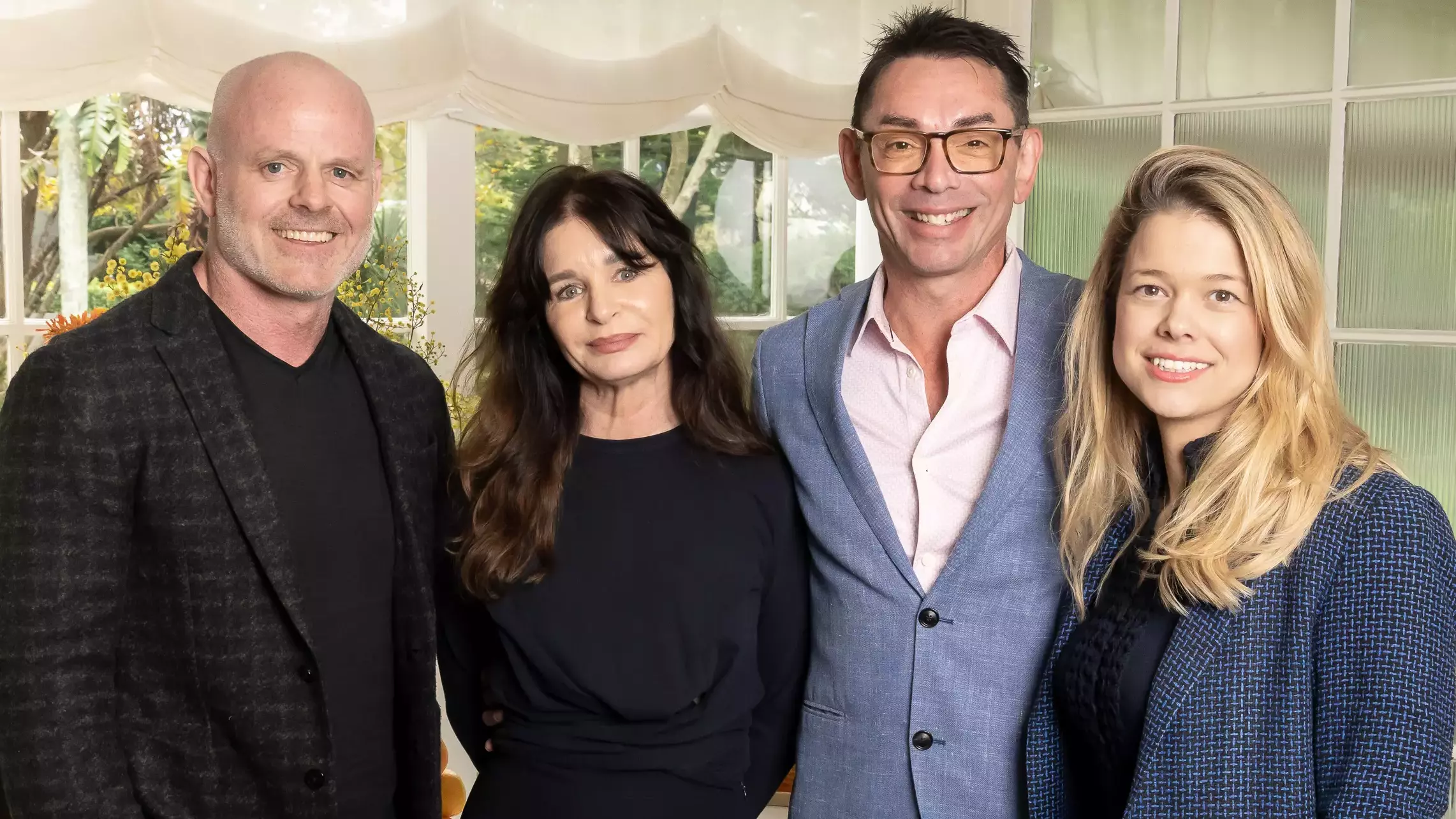
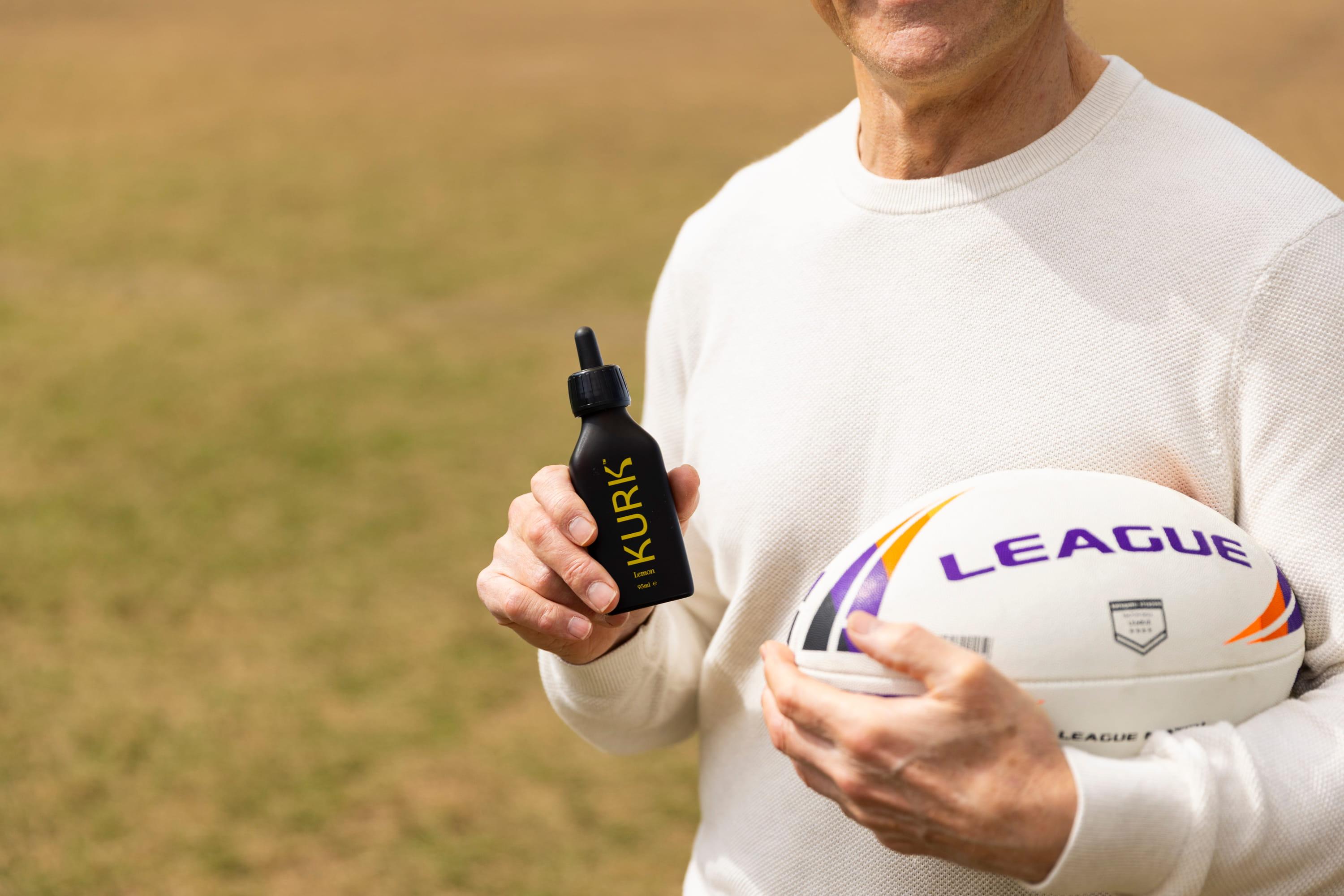
Today we're announcing Wayne as an official KURK partner. We spoke to him out on a rugby field, which felt like the right place for it. What follows is in his own words.
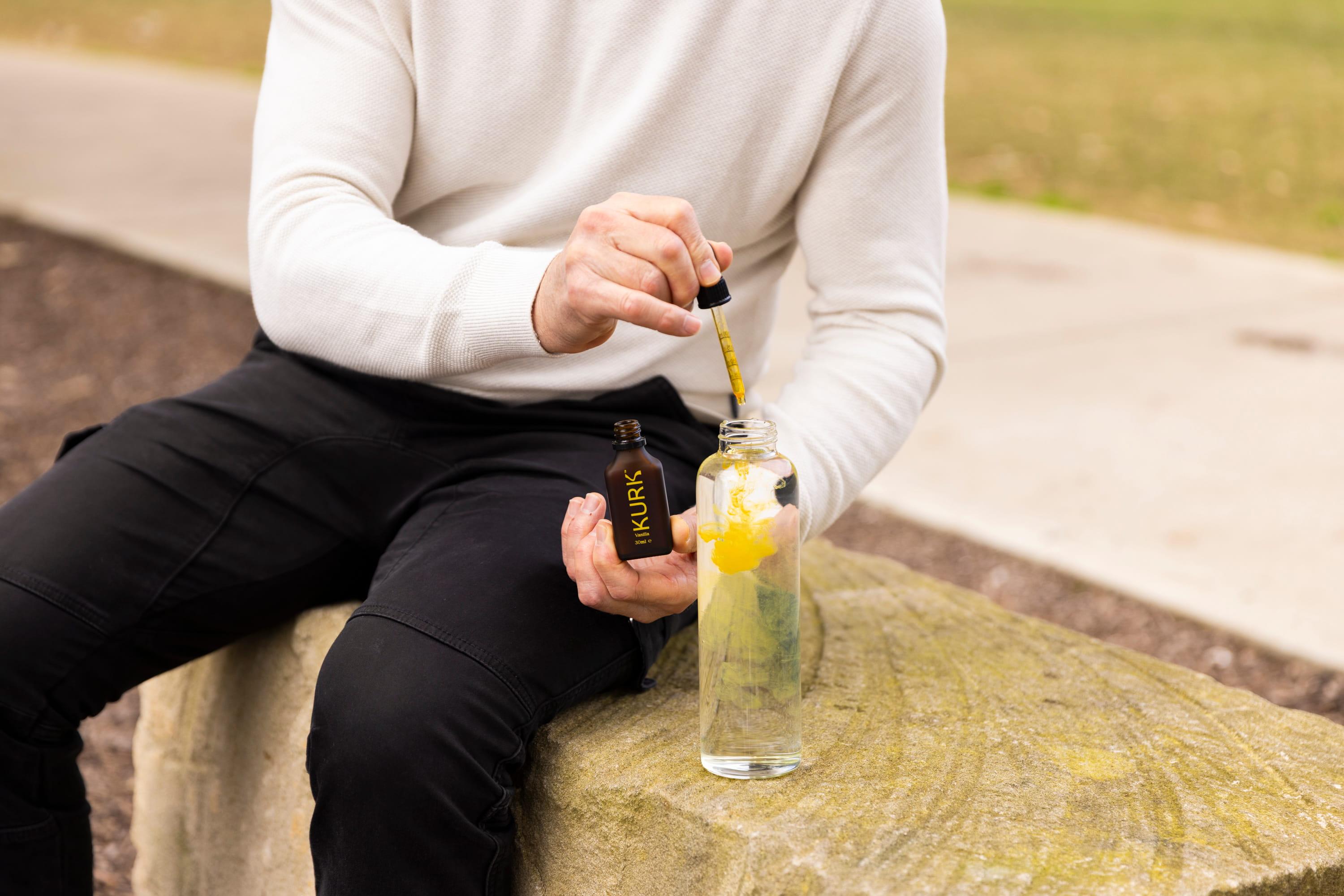
Wayne's daily stack is available as The Wayne Pearce Stack, built around KURK Liquid Curcumin.
You've been offered a lot of products over the years. Why say yes to this one?
"I've had many approaches over the years to endorse products, and a lot of them aren't science-backed. The reason I was attracted to KURK was that there's real science behind it."
"For me, integrity is really important, and I trialled the product before I agreed to endorse it. I think it's fantastic."
What made you different as a player?
"Rugby league is a pretty tough sport, and fortunately for me, my competitive advantage was that I was very disciplined. That discipline applied to the physical training, but also to the mental side and the dietary side."
"For me, preparation was critical and it gave me a competitive edge. I wasn't as big as a lot of the players, and I probably wasn't as skilful, but I saw my competitive advantage being fitter and more resilient than most of the players. That came back to physical preparation, mental preparation, and also my diet and supplementation."
Where did that start? You were young to be thinking about any of this.
"The reason I got into health and fitness was at a very young age, when my father died. I was 14 years of age when he died. He was 45 years of age. He had two brothers that died before the age of 50 from cardiovascular disease."
"Something told me then that there possibly was a genetic connection, so I wanted to just be as healthy as I possibly could, so that I could maybe fend it off if there were issues there."
"There were very, very few resources around that gave insights into health and fitness when I was young. I'm talking back in the '70s. This is before the internet, before computers. You couldn't get onto a computer or onto the internet, because there was no internet. So you had to get to the library. There weren't many books in the libraries that had much information about this sort of stuff. I was fortunate that I then went to university a few years later, and I did a science degree and understood a lot more about the body. I also did psychology there, and understood more about the mind as well."
"This all helped me prepare better than the other guys that were playing rugby league at the time. I sort of got the jump on them, and that became my competitive advantage."
"This is before the internet, before computers... So you had to get to the library."
What do you remember most from the playing days?
"Playing for Australia for the first time was just an unbelievable feeling, because I never ever dreamt as a young kid that I'd be able to do that. Never thought I could."
"My last game at Leichhardt, my home ground, where I played most of my footy, was quite amazing. I remember the lap at the end, running around there, everybody sort of throwing streamers, and some people had tears coming down their cheeks. It just was a real emotional time for me."
"I didn't realise, but the guy who was my manager, Brian Walsh, who sadly passed away a couple of years ago, had organised for three songs to be played at the end, for me to walk around and sort of shake hands. I didn't know this."
Most people accept slowing down. You clearly don't.
"A lot of people say that as you get older you're just going to accept the ageing process, you're going to get a bit flabbier, a bit unfitter. But I honestly believe that it's a frame of mind. I'm mid-60s now, and I'm pushing probably 80% of the weight that I pushed as a player. I'm still reasonably strong, and I believe that resistance training in particular is the key to staying youthful as we get old."
"I'm mid-60s now, and I'm pushing probably 80% of the weight that I pushed as a player."
So what does the week actually look like now?
"I believe that resistance training, and reasonably medium-to-heavy strength training, is a really important part of keeping the body primed as we get older."
"My exercise regime nowadays is split between strength training and aerobic sessions. I usually do three to four weight sessions a week, and I'll do one to two aerobic sessions. For me, because my knees are pretty worn from footy, I don't run anymore. My aerobic sessions are paddling on the harbour. I've got an ocean ski and I go paddling with some friends, and that's quite intense as well."
He's also watched the thinking change underneath him:
"I remember when I was younger it was all about aerobics, and there was a guy called Jim Fixx who wrote a book called The Complete Book of Running. That was the first sort of health book on the scene, back in the '70s, when I was starting to read and understand this field."
"It was all about running. But now the focus has really shifted. Aerobic exercise is still important, but resistance exercise is, I think, undervalued."
Fifty years is a long time to keep showing up. What keeps you doing it?
"The big part of staying strong as we get older is your motivation. You've got to find a reason and a purpose to want to do the exercise, and to want to do the preparation. For me, that's what I see it as. I see it as preparation for life."
"Last year I chalked up my 50 years of resistance training, weight training. You get into a routine, it becomes part of who you are, because you feel so good."
You've talked about inflammation for years, long before it was fashionable.
"Up until probably 10, 15 years ago, I didn't realise the inflammatory effects of gluten on the stomach. So I cut gluten out, and it made a massive difference. But the biggest difference I've noticed is actually since I've been taking the curcumin products from KURK. It's amazing, because I've been taking turmeric for years, but I didn't realise that it wasn't as bioavailable as the KURK products. For me, I'm a big advocate for the KURK products."
What convinced you on the science?
"I was blown away when I saw the science behind the liquid curcumin, and that is really about the bioavailability of the product. 185 times better absorbed, due to the micelle technology. For me, it was unimaginable."
"But it's actually real."
And what's actually changed since you added it?
I guess you could call me a mad professor, because pretty much all my life I've been experimenting with what works and what doesn't work as far as health is concerned. From diet to exercise to supplements. And from my experience over many, many years, the KURK products are the real deal. That's because I’m very in tune with my body and I can feel the difference."
"The reason I support the KURK products is because I can feel the difference, particularly after workouts. I take the KURK Sport immediately after every workout and within 15 minutes I can feel the energy start to come back, which is unusual because I train very hard."
"But before taking the KURK products the energy would be flat for quite some time. So it really does make a difference to my recovery."
"I guess you could call me a mad professor."
Last one. To the bloke reading this who's decided his strongest years are behind him?
"I don't buy into the fact that as you get older you've got to sort of pack up, put the cue in the rack, and not do as much intense training. I still train quite intensely, and a big part of that is resistance training. It's something that helps you feel stronger, but it also has a lot of positive benefits in terms of cognitive function and bone density. There's a whole lot of other benefits as well."
"I don't buy into the fact that as you get older you've got to sort of pack up, put the cue on the rack"
The Wayne Pearce Stack
Two products. Both chosen by Wayne, both earning their place in a routine he's been running for 50 years: KURK Liquid Curcumin (95ml) daily, and KURK Sport electrolytes immediately after every session.
Engineered in our London lab. Doctor-formulated by two cancer survivors. 185× more absorbable than powders or pills. Six years of in-house R&D, an embedded Swansea University researcher at the bench, and Informed Sport accredited.
One 95ml bottle is around three months at 1ml a day and it's covered by our 60-day money-back guarantee.
Wayne Pearce captained Balmain, played 19 Tests for Australia and won the 1985 Rothmans Medal. He is an official KURK partner.