

Tomorrow is World Health Day. And while that sounds like a good reason to congratulate ourselves on the steps we've tracked, the calories we've counted, and the BMIs we've worried about, it might actually be a better moment to ask a harder question.
Are the things we've been told to measure even the right things?
The health metric we still trust was invented nearly 200 years ago
Here is a fact that tends to stop people mid-sentence.
The formula behind the Body Mass Index was created in the 1830s by Adolphe Quetelet, a Belgian mathematician and statistician. Not a physician. Not a physiologist. A mathematician, working on population statistics, who wanted to define the characteristics of the "average man." He was clear at the time that his formula was not intended to measure individual health.
The term "Body Mass Index" wasn't even coined until 1972, when American physiologist Ancel Keys rebranded Quetelet's formula and promoted its use in population-level epidemiological studies.
And yet in 2026, BMI still appears on health assessments, GP summaries, and insurance forms as though it tells us something meaningful about how well your body is actually functioning.
It doesn't. Not on its own.
The same goes for daily step counts, calorie targets, and the exhausting obsession with "clean eating." These are proxies. Shortcuts. Heuristics that give us the comfort of a number when the reality of human health is far more complex and far more interesting. What we were once told to track turns out to be only a fraction of the picture.

Why "healthy or not" is the wrong question to be asking
Health is not binary. You are not healthy or unhealthy. You are operating somewhere on a continuum, influenced by dozens of overlapping systems, most of which your fitness tracker cannot see.
Current research on longevity and long-term wellbeing is telling a very different story to the one we grew up with:
Cellular function matters more than we thought. The quality of what is happening at a microscopic level, specifically how efficiently your cells are working and how effectively your body is maintaining itself, has emerged as one of the most significant indicators of long-term health. You cannot measure that on a set of scales.
Consistency beats intensity, every time. The evidence on ageing well points less to what people do in their peak moments and more to what they do reliably, day after day, year after year. Sustainable daily habits consistently outperform short-term effort.
Sleep, stress, and social connection are physiological, not optional. These are not lifestyle "nice-to-haves." They directly influence how your body functions at every level and yet they rarely appear in a standard health check.
Biological age and chronological age are not the same thing. Scientists are increasingly focused on the gap between how old you are and how old your cells are. For many people, with the right inputs, that gap can shift in their favour.
How the conversation about health has already changed
Something has shifted in how people, especially those in their 40s, 50s, and beyond, think about being well. The conversation has moved.
It is less about aesthetics and more about capability. Less "how do I look?" and more "how do I feel, how do I move, how sharp am I, how much energy do I have for the people and the things I love?"
That is not a small shift. It is a fundamental reframe.
The most forward-thinking approaches to wellness are no longer about restriction, transformation, or quick fixes. They are about quality: quality of ingredients, quality of sleep, quality of daily habits, and quality of information.

The question that should come before "how much?"
If we accept that what goes into your body matters at a cellular level, then the quality of what you consume deserves far more scrutiny than it currently gets.
Not all nutrients work the same way in the body. Not all supplements are formulated with the same scientific rigour. And the gap between a compound that is technically present in a product and one that your body can actually absorb and use is significant, often enormous.
This is where the science becomes genuinely exciting.
Plant-derived compounds have been studied for decades, but our understanding of how to deliver them effectively has advanced considerably. The difference between a poorly bioavailable supplement and a well-formulated one is not a marketing claim. It is biochemistry.
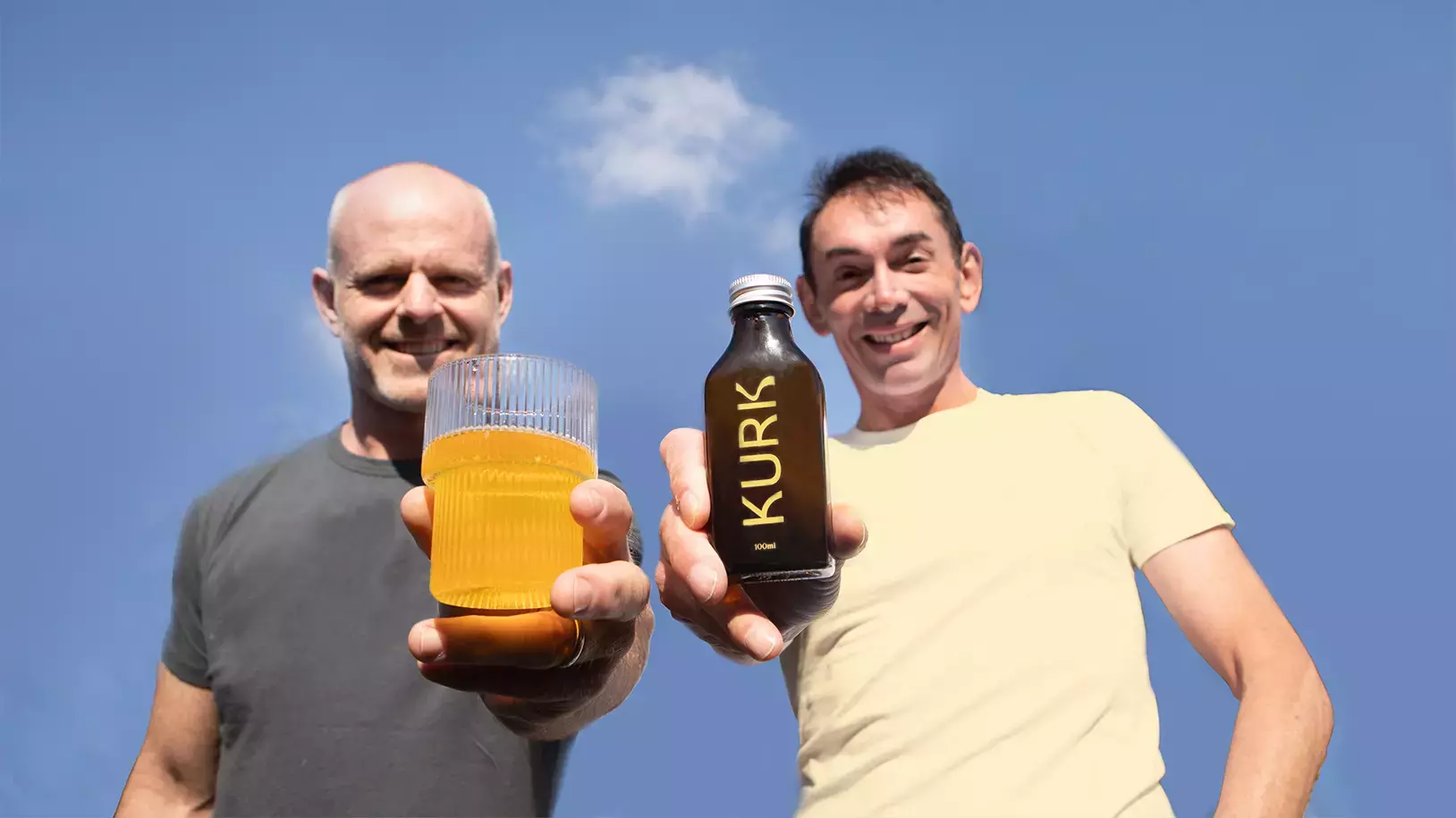
At KURK, this is exactly the question our formulation was built around. Our plant-derived micellar technology exists because Dr Harry, our co-founder and Chief Scientific Officer, started from a simple premise: what is the point of a high-quality ingredient if the body cannot absorb it? The answer shaped everything.

What "healthy" actually looks like in 2026
If we are going to take World Health Day seriously, beyond the social posts and the step challenges, it might mean being willing to retire a few outdated ideas.
Healthy in 2026 is not a number on a scale. It is not a BMI category or a calorie deficit.
It looks like energy that lasts through the afternoon. Joints that move the way you expect them to. Mental clarity that does not require heroic effort. The ability to stay active into your 60s, 70s, and beyond, not just occasionally, but consistently.
It looks like a long game. And the long game requires a different set of inputs than the short one.

The definition we've had since 1948 (and still haven't used)
The WHO Constitution, which entered into force on 7 April 1948, defines health as "a state of complete physical, mental and social well-being and not merely the absence of disease or infirmity."
That definition is 78 years old today.
We have had nearly eight decades to take it seriously.
Maybe this World Health Day is a good moment to start.
At KURK, we believe in ingredient quality, scientific rigour, and building habits that hold up over time. Explore the science behind our formulation on our Science page.